Plastic accounts for a dominant and growing share of solid waste found in the ocean (80%). Plastic particles have been observed in every corner of the globe and at all depths. In fact, 12% of the plastic waste produced worldwide is mismanaged (neither landfilled, incinerated, nor recycled); 3% ends up in the ocean — more than 8,000,000 metric tons. The observable mass of floating plastic (such as the famous “6th continent”) represents only a small percentage of this total. Far from floating quietly on the surface, the overwhelming majority of plastic waste is actually rendered invisible through photooxidation or biodegradation. It thus forms microscopic particles that are irrecoverable and highly harmful to marine organisms, moving up the food chain and ending up on our own plates. These particles are now even found in human blood.
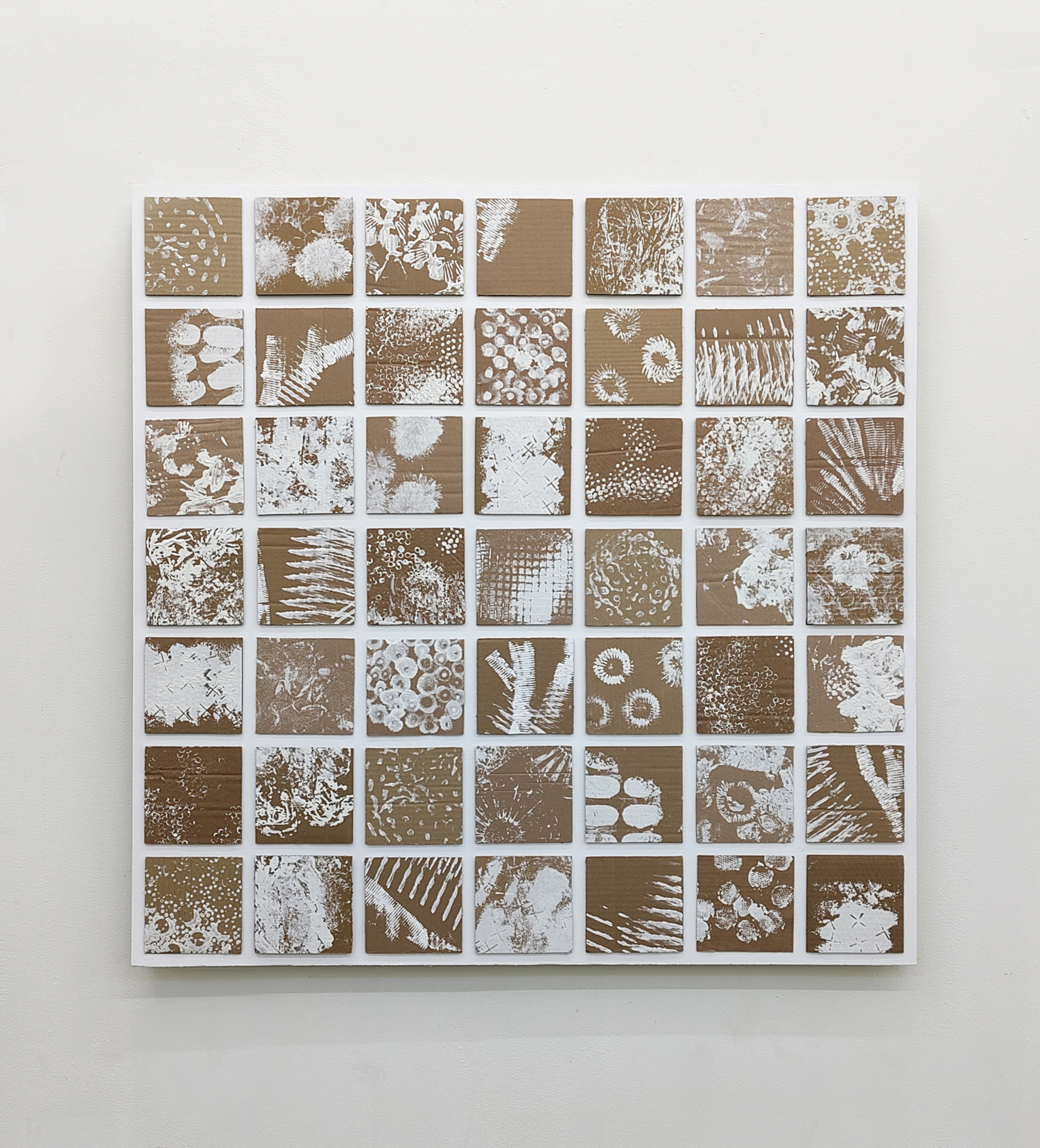
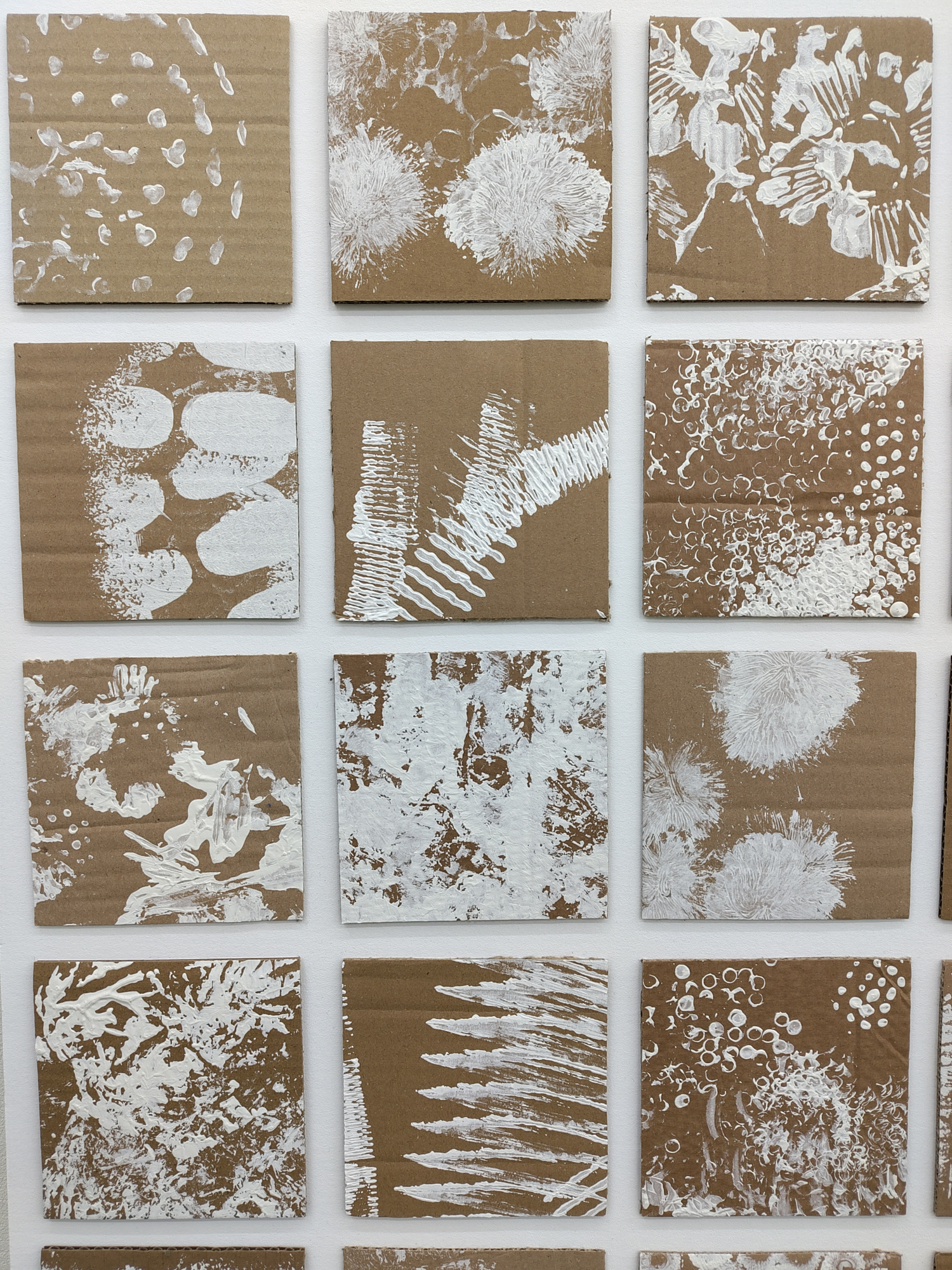
The illustration opposite playfully simulates a sample of specimens examined under a microscope. The prints were made from plastic waste.